| Products | Shop Online |
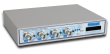
Network Connected Mixed Signal Scope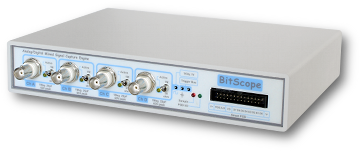 BS445 is a high performance 4+8 channel deep capture mixed signal oscilloscope and data acquisition system.  Key features:
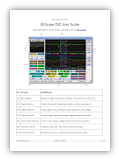
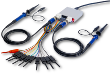
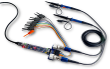
BS445 provides 12 primary capture channels comprising 4 high bandwidth multi-range analog channels and 8 time synchronized logic channels all in one compact instrument. Whether used as a desktop mixed signal test instrument or an embeded data acquisition system, BS445 provides the tools you need to get the job done. Robust Industrial DesignBS445 is available housed in an indestructible low profile extruded aluminum desktop case or in a fully enclosed rack-mount configuration, both specially designed for harsh working environments. 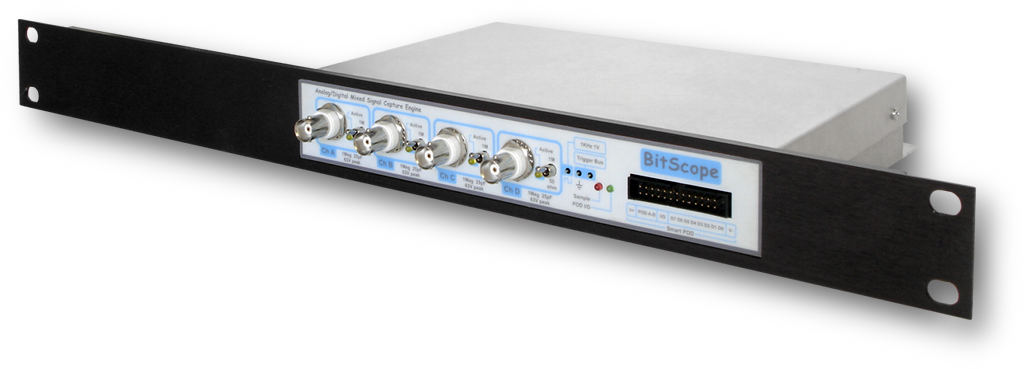 The four analog channel BNC inputs deploy switchable 1MΩ/20pF termination for oscilloscope & test instrument use and 50Ω termination high frequency & data acquisition use. The logic/timing inputs and another four inputs for the analog channels, calibration signals, external trigger, power, ground and I/O control signals are all accessed via the Smart Port connector on the front panel. Capture and diagnostic LEDs on the front panel provide live feedback of the device operation and network connection, data and power LEDs on the back indicate power and comms status for the device. BS445 has simple power requirements (12VDC @ 1A) and uses isolated ethernet (RJ-45/CAT-5) for direct host or LAN connected access. Standard IP protocols are used for universal networkable connectivity for the operator. Probes And Expansion OptionsBitScope is compatible with industry standard oscilloscope probes. PRB-02 (pictured here) is a good choice for higher voltage or high impedance (100MΩ) analog work. 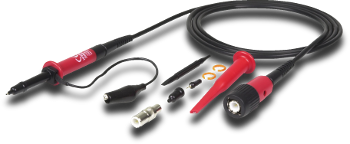 It is a 100:1 probe with a full accessory kit comprising probe clips, a detachable SMB terminated head, SMB/BNC adapter and calibration tool. Other choices are available including 10:1 switchable attenuation probe PRB-01 for high bandwidth lower voltage work and PRB-04 for lower bandwidth use. BitScope is also compatible with a wide range of differential and special purposes probes. Any probe designed for use with a standard oscilloscope may be used as well a BitScope specific probes like the soon to be released DP-01 (details) 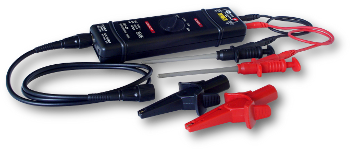 Of course in data acquisition applications probes may not be required. Instead standard BNC terminated RG-58/U or RG174/U (mini) coaxial cables are often used with direct connection to the source. Probe free use is possible due to BS445's built-in switchable 50Ω termination. Like all BitScopes this model also uses the standard IDC-26 connector for Smart Port connected devices on the front panel. For example, one can connect high speed buffered mixed signal logic probes such as LP103X. 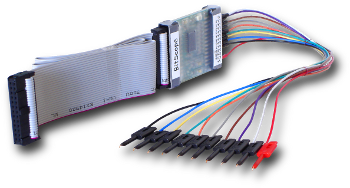 Designed for TTL or 3.3V/5V CMOS levels these probes include 10 x SMT mini-grabber test clips for BitScope's eight logic channels plus the two POD connected analog inputs. Other logic probe options include LP103W (when SMT connectivity is not required) or you can mix and match with attenuating test clips (eg, for 12V or 24V logic work). Of course the Smart Port is not just for connecting probes. It can also be used for special function and software controlled signal processing modules such as waveform generators, RF mixers and sub-samplers or custom data acquisition signal conditioning circuits. The key to this capability is the POD connector's power, ground and serial I/O pins. This makes it possible to connect your own circuits with BS445 providing power, control and waveform capture and generation and your BitScope and circuitry can be programmed using the BitScope Library. BitScope Software Solutions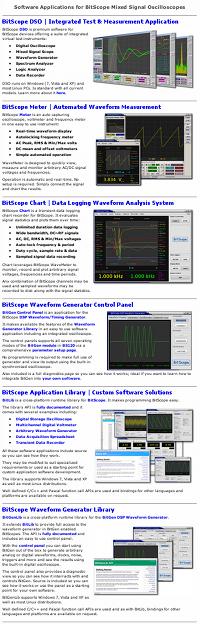 Included with BS445 is BitScope DSO, a powerful test and measurement software application. When first powered on it appears as a familiar multi-channel digital oscilloscope. However, there's a lot more to DSO than this; a set of Virtual Instrument offer a range of built-in test instruments including deep capture mixed signal and digital storage oscilloscopes, a logic state analyzer and spectrum analyzer, X-Y phase plotter and mixed signal data recorder. BitScope DSO is only one of a growing range of software applications for use with BS445. For example, BitScope Meter implements an auto-ranging scope, AC/DC voltmeter and frequency meter in one easy to use package or BitScope Chart which turns BS445 into an 8 or 16 channel chart recording system capable plotting AC, DC, RMS & Min/Max voltages or auto-locked frequency data. Whether looking at waveforms down at audio frequencies, analyzing clocks or data streams at the higher digital logic speeds or analyzing spectra in RF systems, BS445 and BitScope Software can replace a wide range of expensive custom data acquisition and test & measurement systems. It is even possible to use more than one application at the same time in many situations and if the off-the-shelf software does not suit, the BitScope Library and Applications can be used to build bespoke solutions or integrate BS445 with third party products such as LabVIEW, MatLab or even Excel. Isolated Network ConnectivityBS445 uses standard ethernet for host connectivity. It may be connect directly via a spare network port or via a LAN so it may be shared by more than one operator. Ethernet connectivity means it is fully electrically isolated (to the same standard as ethernet). This can be important in high voltage applications, in electrically noisy environments or to use it referenced to different grounds or avoid ground loops. BS445 uses standard IP protocols so it may be used remotely anywhere in the world so long as there is a network available. This makes it ideal for remote data acquisition and telemetry applications. No PC or other computer is required at the remote end, just a source of 12V power and a network. No special drivers are required so it may be used with virtually any host and operating system that can talk to a network. BitScope software is with Windows (7 and 8), Linux and Mac OSX. Powerful Mixed Signal ArchitectureBS445 is a powerful integrated mixed signal waveform capture analysis system. It has superb analog performance; always a key design objective for any BitScope! 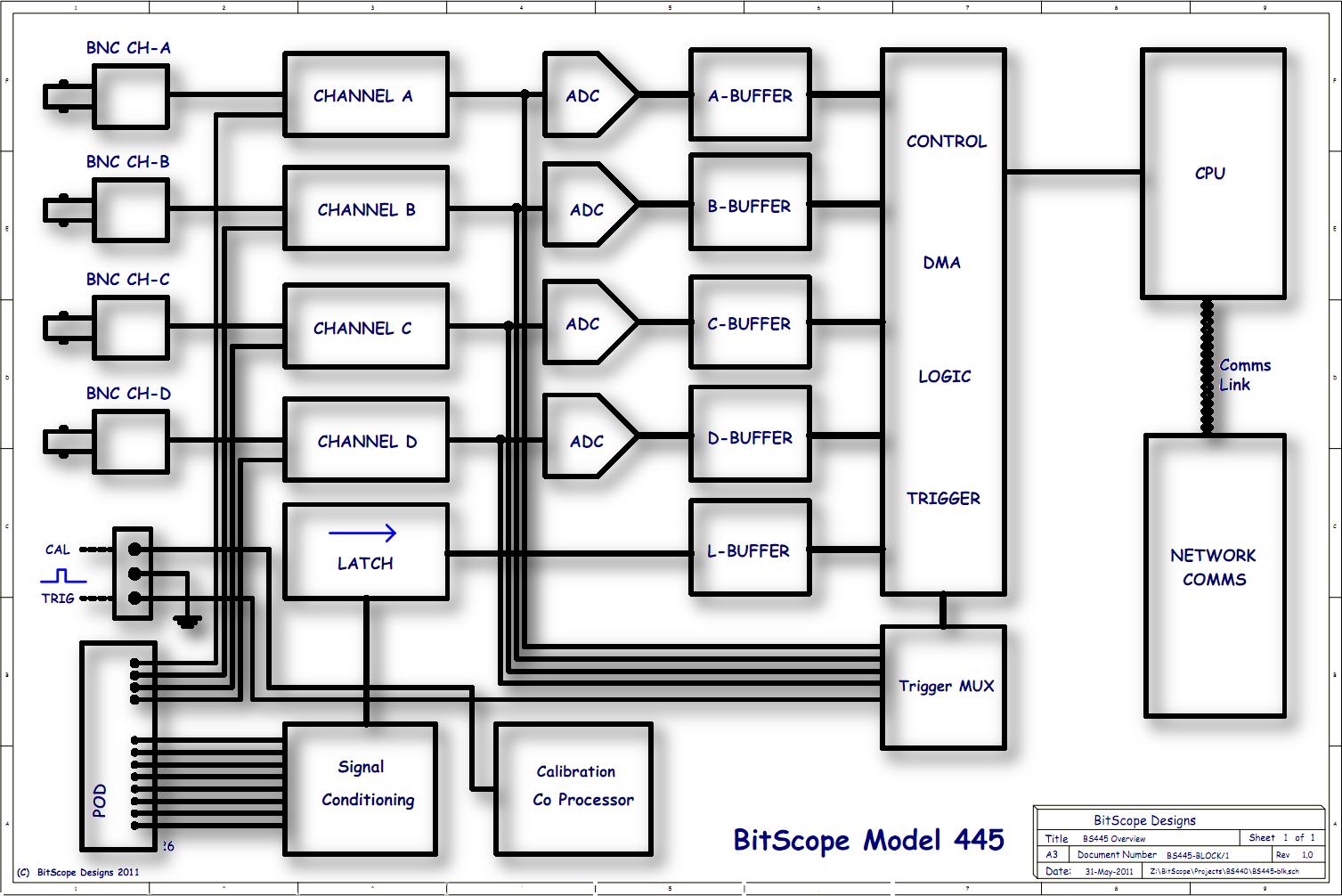 BS445 Block Diagram (click to enlarge) The design has been further refined with new analog front end (AFE) electronics implementing 4 selectable voltage ranges and 20X pre-scaler on every channel. The new AFE, a capture buffer and A/D dedicated to each channel means BS445 enjoys exceptionally low crosstalk and can support the highest sample rates on all channel simultaneously. Likewise the logic channels are designed to work seemlessly with analog capture, offering an additional 8 digital channels which work at standard logic levels. An additional 4 analog inputs are available via the POD connector making a total of 16 inputs (8 analog plus 8 logic) which may be used together at lower speeds for multi-channel data acquisition and monitoring. All these options and many others are set up as needed automatically in software. Related Posts |
Copyright © 2023 BitScope Designs